Industries
Transformer sourcing for utilities and co-ops
Utilities buy transformers for three reasons: to replace units that have failed or reached end of life, to hold as system spares, and to build new capacity. All three are harder when a new large transformer takes years to arrive.
The typical problem
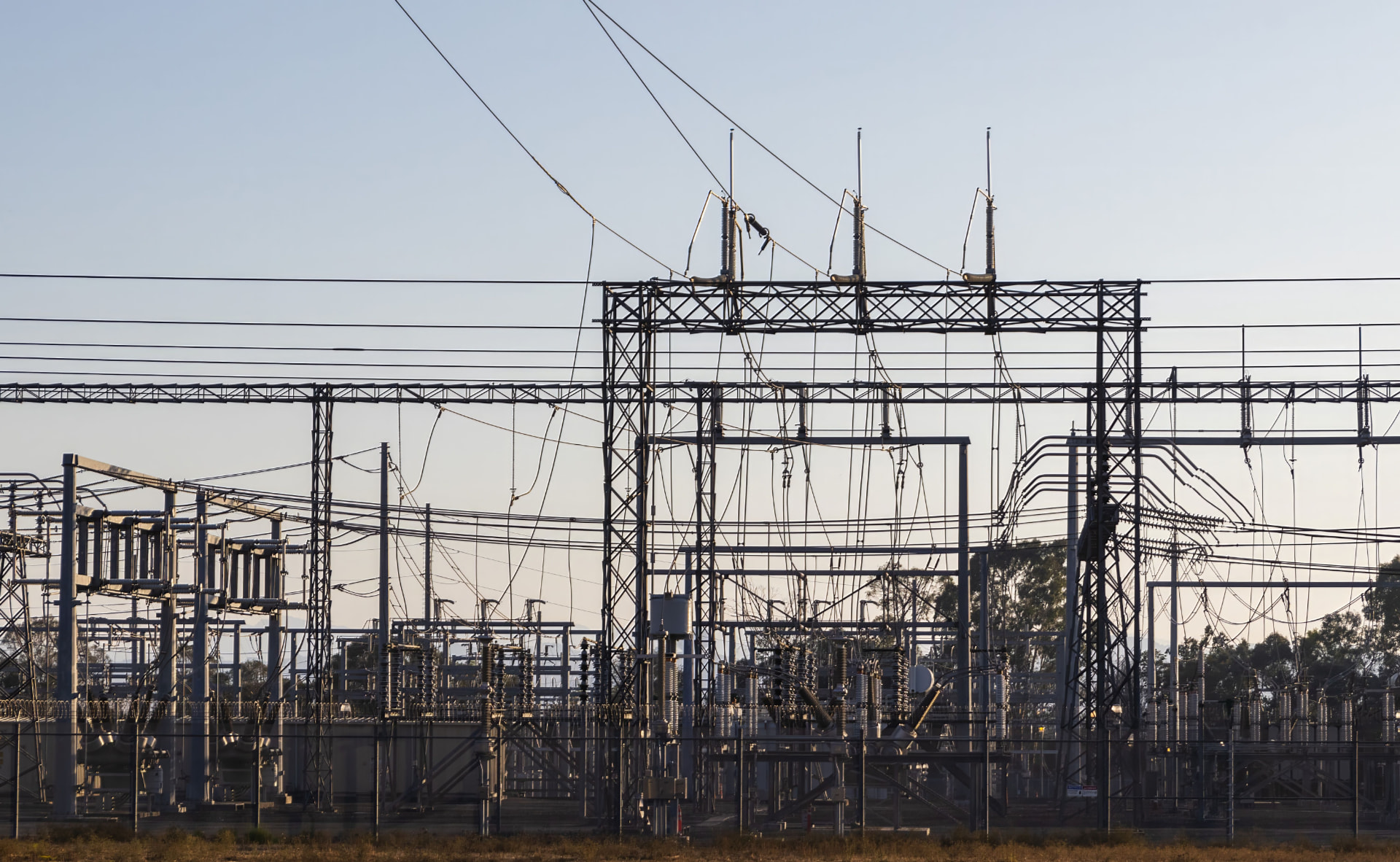
Most utilities have a fleet of large transformers with a wide range of ages. Hitachi Energy notes that large power transformers can operate for up to 40 years, and many units in service today are approaching that point. When one fails, the replacement competes for factory slots with generation interconnections and data center projects.
According to Wood Mackenzie's Q2 2025 survey, as reported by POWER Magazine, average lead times reached 128 weeks for power transformers. A utility that discovers it needs a unit today, without a spare on hand, faces a long gap.
Utilities also have their own standards. Approved vendor lists, specific test requirements, control and protection interfaces, and sometimes local manufacturing preferences narrow the field further.
What we search for
- Replacement units that match an existing installation closely enough to drop in, including impedance, vector group, footprint and bushing positions.
- System spares for your most exposed substations, including units held by other utilities that may be willing to sell or trade.
- Capital project equipment through open and released factory slots, including at manufacturers outside your usual list.
- Temporary capacity through mobile transformers and mobile substations.
Working to your standards
We check every unit against your specification and your utility's own requirements, not only the nameplate. That includes test standards, IEEE/ANSI C57 or IEC 60076, and any additional tests you normally require. For units that are not new, we collect factory test reports, DGA history and storage records, and arrange independent field testing where needed. See how we check a unit.
If a unit is close but not exact, we say where it differs and what a modification would involve, so your engineers can decide.
Spares planning
The time to think about spares is before a failure. We can help identify which substations would be hardest to restore, what a workable replacement would look like for each, and where such units exist today. That gives your team a list of options to act on quickly if a failure happens. It also feeds into longer-term procurement, since some spares are best bought new and some can be found on the secondary market.
Relevant equipment
- Large and medium power transformers
- Mobile transformers and mobile substations
- Used, surplus and never-energized transformers
- High-voltage switchgear and breakers
If you have a failed unit now, read what to do when a large transformer fails and start a search.
FAQ
Common questions
Can you search to our utility's transformer standards?
Yes. Send us your standards along with the specification and we check every option against both before it reaches you.
Do you help utilities find system spares?
Yes. We search for spares that match your existing fleet, including surplus units held by other utilities and developers.
How do you handle an emergency replacement for a utility?
We start outreach right away, look for mobile units to restore service, and search for a permanent replacement in parallel.
Tell us what you need.
A 15-minute call is usually enough to scope a search.
Contact details coming soon