Equipment
Generator step-up (GSU) transformers
A generator step-up transformer raises the output voltage of a power plant to the voltage of the transmission line it connects to. On most generation projects it is the single longest-lead piece of equipment, and it is often the item that decides whether a project meets its interconnection date.
The role of a GSU in different plants
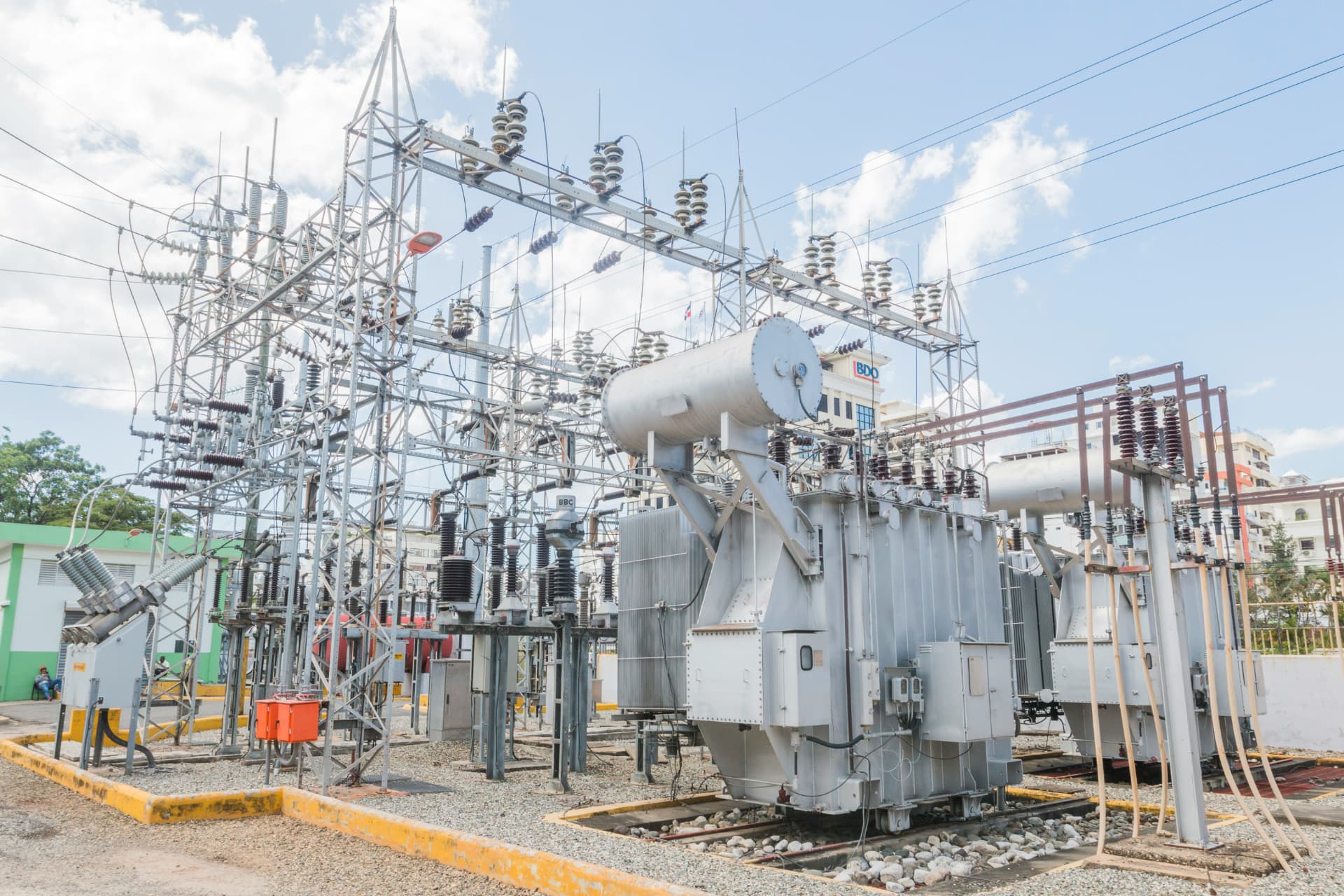
The basic job is the same everywhere, but the details change with the type of plant:
- Solar and battery storage. Inverters feed a medium-voltage collector system, and one or more main power transformers step that up to transmission voltage at the project substation. These are often called main power transformers rather than GSUs, but the sourcing problem is the same.
- Wind. Similar to solar, with a collector system and a substation transformer at the point of interconnection.
- Gas and other thermal plants. The GSU connects directly to the generator terminals, so its low-voltage winding has to match the generator voltage and it has to handle the generator's operating profile.
Hybrid plants that combine solar and storage, or that add storage to an existing site, sometimes reuse or upgrade an existing transformer. That can change what you need to buy.
Why GSU lead times run long
According to Wood Mackenzie's Q2 2025 survey, as reported by POWER Magazine, average lead times reached 144 weeks for GSUs, longer than the 128-week average for power transformers in the same survey. Wood Mackenzie also estimated in 2025 that GSU prices were up about 45% since 2019.
Part of the reason is that GSUs are among the most customized units a factory builds. Generator voltage, impedance targets set by interconnection studies, and site-specific cooling and sound requirements all vary from project to project. That limits how easily a unit built for one plant can be reassigned to another.
Demand also arrives in waves. When many projects reach the same stage of interconnection at once, they compete for the same factory slots.
Typical specification points
When we search for a GSU, these are the points that most often decide whether a unit fits:
- MVA rating at each cooling stage, for example ONAN, ONAF and ODAF, at the required temperature rise.
- High-voltage and low-voltage ratings, and whether a tertiary winding is needed.
- Impedance and its tolerance, which usually comes from the interconnection study.
- Vector group and phase shift.
- BIL for each winding.
- Tap changer type and range, OLTC or DETC.
- Insulating fluid, including natural ester fluid where fire safety or environmental rules call for it.
Our specification matching section lists everything we check.
Sourcing options
For a GSU we usually look in three places at once. First, open and released factory slots, including at manufacturers outside the usual short list. Second, units from projects that were cancelled or withdrawn. Lawrence Berkeley National Laboratory's Queued Up 2026 report found that more than 750 GW of projects withdrew from U.S. interconnection queues in 2025, and some of those projects had already ordered equipment. Third, utility and IPP spares that may be available for sale.
A unit built for another project rarely matches your spec exactly. We tell you where it differs, whether the difference matters for your interconnection, and what a modification would involve. See used, surplus and never-energized transformers for how we check those units.
When to start looking
Earlier is better. Many developers start a market check once the interconnection study has fixed the impedance and voltage requirements, even if procurement is months away. Knowing what is available, and at what delivery date, helps with schedule and budget decisions. You can start a search at any stage.
FAQ
Common questions
Can a GSU built for another project match my generator?
Sometimes. We compare the low-voltage winding, MVA rating, impedance and vector group against your generator and interconnection study, and we tell you what would need to change before you consider it.
Why are GSUs harder to find than other transformers?
Each GSU is built around a specific generator and grid connection, so fewer existing units fit a new project. That is why we contact a wide list of owners, developers and factories for every GSU search.
Do you source GSUs for solar, wind and storage projects?
Yes. We search for step-up units for renewable, storage and conventional generation, and we check each option against the project's interconnection requirements.
Tell us what you need.
A 15-minute call is usually enough to scope a search.
Contact details coming soon